Showing posts with label Atheist. Show all posts

Saturday, June 11, 2011

A New Personal-Development

fight clubMaybe self-improvement isn't the answer.... Maybe self-destruction is the answer.  ~Chuck Palahniuk, Fight Club

How do you partake in personal development, if self-destruction is the answer? Eckhart Tolle’s spiritual insight and Owen Cook’s ‘Real Social Dynamics’ seem to be part of a new genre of personal development where the goal is actually to destroy the ‘self’.

The old models of self-improvement seem to emphasize self-esteem through building up the ego. Eckhart Tolle, in his books “The Power of Now” and “A New Earth”, is quick to determine the ego as the target of destruction. In his books, the ego represents a ‘false self’ constructed by social conditioning upon which the identity of the individual rests. This identification is said to be the root of all human struggles; we are constantly trying to reinforce our positive sense of self by reacting against all those who threaten the boundaries of our ‘self' concept’.

What does it mean to enact self-destruction? Rather than trying to build up a sense of self by collecting more and more STUFF (material possessions, physical characteristics, belief-systems, and ideologies), the act of self-destruction says “screw it all".

The things you own end up owning you.  It's only after you lose everything that you're free to do anything.  ~Chuck Palahniuk, Fight Club

How does this relate to spiritual belief-systems? Having a belief-system is like owning a material possession. They say you are not complete without one; therefore, ‘dissatisfied lack’ is the default state of ones constructed reality. In the same way consumer culture constructs our desire to be ‘complete’ through commodities, spiritual belief-systems construct a reality where ‘lack’ characterizes the individual who is not able to identify themselves under a specific tradition.

The good news is that this reality does not apply to you if you are simply aware that it exists. This will also allow you to understand why so many religious people are quick to defend their faith; their sense of self depends on it.

Attacking someone's belief system is like attacking their sense of self in the same way that insulting their clothing may offend them. This is not to say we should avoid dialogue with religious people in fear of offending them; the opposite is the case. We should engage in conversations about spiritually more often. But remember, don’t be a dick.

The socially conditioned ‘self’ does not dissolve without a fight; attacking it will only make it stronger. The ‘self’ will sense threat, pump itself up, and come back bigger and stronger than before. Rather than setting up this reality of ‘battle’, the method of seduction is far more effective.

Be the change you want to see. Only when your own ego is dealt with will you be able to offer complete value to all you encounter. This state of being is the art of seduction (weather it be in the context of work, family-life, or dating). Arguing with religious persons for the sake of being right only builds your own sense of identity as superior. Rather than taking value in the form of argument, one must provide value in the form of careful dialogue. 

If value is light, taking value leads to darkness. We can not get rid of darkness with more darkness. When your sense of ‘self’ is not the measure of your value, the value you offer provides the basis for your happiness.

Beyond Atheism

fight-clubYou're not your job. You're not how much money you have in the bank. You're not the car you drive. You're not the contents of your wallet. You're not your fucking khakis. You're the all-singing, all-dancing crap of the world. – Tyler Durden

You are not your belief system. You are not even your lack of a belief system. In the same way theists gain a sense of identity through their display of a belief system, atheists gain a sense of identity through their opposition to belief systems. Doesn’t this sound absurd?

I understand the word ‘atheist’ has served well in mobilizing an opposition to the harmful side of religion, but I say lets evolve.

Fuck off with your sofa units and string green stripe patterns, I say never be complete, I say stop being perfect, I say let... lets evolve, let the chips fall where they may. – Tyler Durden

Only when we can stop messing with the tasteless decor of outdated belief-systems, can we design a masterpiece. Lets focus on what we stand for, rather than what we don’t find fashionable. By fixating on the belief systems of others, we’re being drawn into their reality of identification. With identification comes boundaries, opposition, and a world full of resentment.

It's only after we've lost everything that we're free to do anything. – Tyler Durden

It is not enough to lose rigid belief systems. Oppositional identities maintain the same belief as the failing “war on drugs”, “war on terror”, “war on crime” mentality; the belief that “we” have the truth, “they” are wrong and now we must stomp them out.

The days of “militant atheism” must come to an end before atheists spark the next ‘religious war’.

Imagine there's no countries,
It isn't hard to do,
Nothing to kill or die for,
No religion too,
Imagine all the people
Living life in peace... – John Lennon

When John Lennon talks about no countries and no religion, he is talking about no boundaries. Having “no religion” can not mean a world of atheists since atheists can only maintain their identity so long as theists still exist; an ‘us vs. them’ mentality is vital to defining yourself in opposition to an ‘other’.

Evolve. When boundaries are dissolved, the identity you hold will stop holding onto you.

Thursday, June 9, 2011

Arguing with Religious Fanatics

science and faithWe all know the popular brand of atheism which tends to poke fun at religion and assert its truth by appealing to science and rationality, right?

I've come to see this type of atheism as reactive rather than proactive, and makes people seem arrogant rather than pushing them to understand the deeper issues.

This reactionary atheism also makes religious people angry rather than logically convincing them of anything. I don't think logic and rationality are the best tools in these types of arguments and this is why:

Contemporary religion and the increasing level fundamentalism is a reaction against techno-capitalist culture where everything is ultra rationalized to the point where some people are not feeling satisfied or fulfilled in an environment they perceive as sterile. Most atheists think more rationality and logic is the cure, but this is a mistake since its like adding fuel to the fire; they will only get firmer in their beliefs since someone is trying to give them more of the "problem".

Look at it this way: If a religious person tries to convince you that they are right, they will give you mystical reasons which, in your perspective, is just more of the problem. As an atheist, one should consider arguing in ways which do more than just shake up the hornet-nest.

Appealing to the motivations of the other person is one of the most effective ways to argue. If their problem is a lack of emotional depth in the world, than maybe atheists should consider their sense of reality rather than appealing directly to science and rationality. This is not to oppose emotion to science, Carl Sagan does a wonderful job at articulating the two simultaneously. 

I don't condone the religious atrocities, nor do I have anything against science and rationality. Although I think the popular brand of militant atheism is probably liberating for people who have recently 'came out', I encourage people to develop more sophisticated ways of looking at the issues rather than getting stuck in a reactionary rut.

Monday, December 27, 2010

What is Atheist Spirituality?


Atheist SpiritualityAfter a year and a half of writing on this seemingly oxymoronic subject, this question continuously arises. Although many past posts have attempted to clarify this concept, there has been constant development in my understanding.

How can there be an ‘atheist spirituality’? An answer can be developed through looking at the preconceptions we may have about the word ‘spirituality’. The word ‘spirituality’ is strongly, and unnecessarily, bound to ideas of religion, dualistic philosophies of transcendence, and dogmas demanding faith. In the modern era, spiritual practices have been largely institutionalized into formal faith categorizations. Spirituality has become the prime commodity of the religious institution. This association between religion an spirituality has become intensely entrenched in most modern cultures.

What about people claiming they are ‘spiritual but not religious’? Aside from increasing fundamentalism, there is a widespread lack of trust in religious institutions. The world is becoming more dichotomous; as fundamentalists become increasingly rebellious when faced with modern ideals. This influences modern individuals who are loosely religious to become sceptical of these institutions since they increasingly seen as being harmful. While continuing to practice spirituality on a personal level, many are disassociating themselves from religions which are developing a poor reputation. This personal belief or practice may still be entrenched in the dualisms of religion; therefore, it does not answer the question of an atheist spirituality.

What makes an atheist spirituality different? An atheist spirituality departs from the mainstream paradigm. It goes beyond ‘spiritual but not religious’ by rebelling against religious constructions. The philosophical shift from dualism to materialism can be illustrated by following historical ideas about the ‘soul’. Socrates can be noted as arriving at the necessity of the soul through questioning what is the user vs. the used. We may use a pen to write; therefore, the pen is the object (used) and the person is the subject (user). Socrates continues by asking: but isn't the hand used as well? and what about the eyes? Eventually, we may realize that everything on our body can be used – even our brains may be used to contemplate the process. This is where Socrates concludes that the user must be an immaterial soul. Fast forwarding, we can look at Cartesian dualism associating the soul with the ‘mind’. Descartes thinking-being of mind is the subject who acts on the objects of the profane bodies and earth. Fast forwarding again, we can see imminent conceptions of ‘God’ in the materialist philosophy of Spinoza. See his Ethics for extensive elaboration on this philosophical position. Deleuze, the most contemporary and my personal favourite, has written extensively on materialist philosophies of life; click ‘here’ to see a former post on Deleuze.

What does the materialist paradigm mean for ‘spiritual’ practice? This shift revolutionizes the dominate western conceptions of spirituality by changing all former definitions. The definition of ‘God’ is transformed into a pantheistic ‘God’ which Rickard Dawkins claims to be a “sexed up atheism”. Sin is no longer bound to transcendental judgment, but rather, becomes an individually autonomous ethics. Spiritual experiences of awe and wonder are no longer attributed to the presence of a divine entity, but rather, can be experienced through the glory of nature, evolution, and contemplating ones part in an infinitely unthinkable unfolding of life. Mystery of ‘God’ becomes the mystery of nature – a mystery which may infinitely extent its reach past our momentary understanding. Ritual becomes more than mere compliance for the sake of salvation, but a practice of affecting the mind-body (regarded as one) for the sake of happiness. Spirit is no longer the magic entity hovering somewhere in or around us, but rather, it is the human spirit: the spirit of love, joy, happiness, and peace. Although these virtues resemble those of Christianity, they are not seen as given by a God as a reward for good behaviour; rather, they are seen as virtues which come from within and can only be achieved in the present moment, not requiring a specific set of predetermined beliefs or rituals. Beliefs may be held, but are held loosely and not bound with one’s identity. Specific practices may be used, but their use is regarded as a way of changing one’s mental state. Mental states are also regarded as material since they rely on complex material interactions. An atheistic spiritual life is one of nomadic being, not clinging to fixed identity templates.

With all this said, openness to discovery may lead spiritual atheists in a multitude of directions. Since the joy is in the journey, future posts clarifying ‘atheist spirituality’ may differ from this one. Openness to experience is the way to ‘salvation’ in this search for spiritual complexity and life-fulfilling atheism.

Saturday, December 25, 2010

Merry Christmas Atheists


Atheist ChristmasFirst of all, I’d like to say Merry Christmas to all. Atheists can’t enjoy Christmas? Is this an oxymoron? This is not at all the case. Atheists can fully savour the holiday without appealing to alternate identity-phrases, political correctness, or altogether avoidance. Although It is often thought that atheists are opposed to saying “Merry Christmas”, this could not be further from reality for the vast majority of atheists. The problem of saying “Christmas” vs. saying “holiday” is not an atheist battle, but rather, an inter-faith battle. It is one that media discourse has moulded into a problem concerning the every-increasing public ‘threat’ of atheism –  most viciously seen every year by Fox’s ‘Culture Warriors’.  Atheists have become the scapegoat; they have become the ‘outsiders’ whom which it is politically correct to blame for the ‘demise of Christmas’. These inter-faith disputes over political correctness do not concern the atheist – aside from being sucked into an insecure and anxious national dialogue as the scapegoat. The reasonable atheist is too busy living the day to its fullest – since, of course, our days are finite – it is a waste of valuable time to be bothered by such holiday identity politics. Of course there will be the odd asshole-atheists who are too busy building ego identities to get past the awkward avoidances, futile debates, and creative alternate constructions of the phrase ‘Merry Christmas’.

Getting past the Grinch mentality is not easy and inner-battles are plenty. Although the concern of religious harm is the main priority of the atheists, identity politics often creep in and complicate this simple concern. Saying ‘Merry Christmas’ may be taken as an expression of ones personal faith affiliation. This can be an embarrassing affiliation since atheists do not want to appear as part of the religious ‘herd mentality’ that is often associated with docility of the mind. Freethinking, in this sense, not only acts as a personal liberation, but pulls social identification toward a category of negative identity. This is an identity characterized by a sort of liberation mentality directly juxtaposed to the resented mentality of another group. For atheists, using Christian terms and traditions may act as an embarrassment since it goes directly against what they stand for. The issue here is that what an atheist may ‘stand for’ creates an identity in itself; therefore, when confronted by threatening identities the atheist may build walls, stock-pile extra ammunition, and map out the target into narrow categorical boxes. This is what leads to the Bah-Humbug-mentality of the outsider, the rational truth-holder, and ultimate alienation from the spirit of Christmas.

What do I mean by ‘Christmas spirit’? By this I do not mean a religious affiliation. Although there are some people may go overboard with the dogma aspect, most people practicing the tradition of Christmas carry loose religious affiliation or no religious affiliation at all. The holiday is about much more than the fundamental dogmas; the holiday is about a certain collective experience. This collective experience that is central to many religions’ does not need to be bound up with harmful mentalities. Being a freethinker does not mean trading in all emotional potential for a cold slab of rationality. The best dinners are those with a variety of flavours; therefore, the atheist must not only chop ham carefully, but be able to season it with a variety of spices. The sensual experience of seasoned flavour is not a rational engagement. Although it is functionally useful to cut the food properly, atheists must rise above the Fox news constructions of straw-man identities and find the spice that makes tradition worth while. Nobody wants a cold slab of bah-humbug-ham when they can have the full feast. Enjoy the food, the drinks, and the family… and again, Merry Christmas.

Saturday, November 20, 2010

Hitchens Hijacking the Language of Spirituality


Atheist SpiritualityIt’s time we realized that traditional religion is far from the only source of meaning, values, and a sense of the transcendent. – Julian Baggini in Psychologies

There seems to be a popular belief among atheists that ‘spiritual’ words are unnecessary, obscuring, and should be avoided at all costs. I beg to differ for two reasons. First, the use of ‘spiritual’ language in science will further make the statement that ‘spiritual’ contemplation should not be limited to the fenced in realm of spiritual leaders who claim to be the masters of morals. Secondly, scientific language does not go far enough to convey the emotional affect science can evoke. With these two points in mind (the hijacking and the enriching), I propose that science should be viewed by as a poetics of life. As Richard Dawkins says; “Science is the poetry of reality”. Christopher Hitchens illustrates ‘spiritual’ contemplation of the natural world in an interview with retired Unitarian minister (and self-professed “liberal Christian”) Marilyn Sewell. Hitchens hijacks the word ‘numinous’ when referring to a sense of awe:

It’s innate in us to be overawed by certain moments, say, at evening on a mountaintop or sunset on the boundaries of the ocean. Or, in my case, looking through the Hubble telescope at those extraordinary pictures. We have a sense of awe and wonder at something beyond ourselves, and so we should, because our own lives are very transient and insignificant. That’s the numinous, and there’s enough wonder in the natural world without any resort to the supernatural being required.

Hitchens goes on to describe his classification of ‘soul’ in referring to affective literature:

It’s what you might call “the x-factor”—I don’t have a satisfactory term for it—it’s what I mean by the element of us that isn’t entirely materialistic: the numinous, the transcendent, the innocence of children (even though we know from Freud that childhood isn’t as innocent as all that), the existence of love (which is, likewise, unquantifiable but that anyone would be a fool who said it wasn’t a powerful force), and so forth. I don’t think the soul is immortal, or at least not immortal in individuals, but it may be immortal as an aspect of the human personality because when I talk about what literature nourishes, it would be silly of me or reductionist to say that it nourishes the brain.

Referring to the ‘transcendent’ does not necessarily require a dualistic framework. Referring to the transcendent as an experience – rather than an existing magical reality –  is completely possible within an imminent philosophy. Hijacking the topics and language of spiritualists should not be resisted, but rather, it should be used carefully to enrich the scientific discourses.

Wednesday, September 29, 2010

Atheists Get Top Score on Religious Knowledge Survey

Pew Forum: U.S. Religious Knowledge Survey                    
The Pew Forum recently released their U.S. Religious Knowledge Survey results concerning religious knowledge based on religious affiliation. The poll image and the following quote are taken from from: http://pewforum.org/Other-Beliefs-and-Practices/U-S-Religious-Knowledge-Survey.aspx

Atheists and agnostics, Jews and Mormons are among the highest-scoring groups on a new survey of religious knowledge, outperforming evangelical Protestants, mainline Protestants and Catholics on questions about the core teachings, history and leading figures of major world religions.

On average, Americans correctly answer 16 of the 32 religious knowledge questions on the survey by the Pew Research Center’s Forum on Religion & Public Life. Atheists and agnostics average 20.9 correct answers. Jews and Mormons do about as well, averaging 20.5 and 20.3 correct answers, respectively. Protestants as a whole average 16 correct answers; Catholics as a whole, 14.7. Atheists and agnostics, Jews and Mormons perform better than other groups on the survey even after controlling for differing levels of education.

           How do you match up? Their sample quiz is available Here

Tuesday, September 21, 2010

Sam Harris: The Problem With Atheism

Sam Harris states a great deal of my thoughts on atheism and spirituality in this two part video. Here he makes the key distinction between iron age mythic belief and spirituality as a contemplative practice. These categories  resemble the dichotomy William James makes in his descriptions of religion of the 'sick soul', and religion of the 'healthy minded'.

Sam Harris makes the following key points in the video:
- There is more to life than momentary pleasures
- We have an inability to break from discursive modes of thought
- We must first spend time building up our spiritual practice in order to fairly judge contemplative claims
- Atheists must not simply dismiss all spiritual experience as bad science or bad philosophy
- Atheism seems have a disinterest in such available experiences or equate them with banal pleasures
- Atheists may appear less wise than the religious opponents for their sloppy judgment of such experiences
- The universe is stranger than atheists tend to advocate
- We must convince a myth infatuated world that love and curiosity are sufficient


Monday, January 11, 2010

Why ‘Atheist Spirituality’?

question-mark
           I use the name ‘Atheist Spirituality’ since it fills the role of describing my beliefs accurately while providing well recognizable terms. Though, it is still insufficient since it uses the word 'atheist' which focuses on what one does not believe in. Rather than asserting ones lack of beliefs, a title that asserts ones beliefs would be more useful. Personally, 'Naturalistic pantheist' is the closest I can come to such a definition. If I were to use this title, many people would simply not understand what this blog is about at first glance since ‘naturalistic pantheism’ as a concept that is not widely known.
          
          Spiritual atheism does suffice, but the drawback is that labeling ones self according to ones lack of beliefs may be more useful if one takes a protest position. Rather than taking on the identity of a protester (paying more attention to the object of protest), I prefer to the focus on what I stand for: an open-minded approach to spirituality. Many people have other positive assertions of belief such as ethical freedom (Christopher Hitchens), science (Richard Dawkins), free will (Jean-Paul Sartre). Playing the protester and playing the advocate is a fine balance one must consider. 

        
           My approach to open-minded spirituality consists of contemplation in light of viewpoints within modern and post-modern philosophy. Philosophy is questions that may never be answered while religion is answers that may never be questioned. Such questions can only be pursued if one has a highly critical mind-filter while considering the validity of every position presented. When faced with religion, a fool merely accepts it, politicians abuse it, and the wise question it.


Follow your bliss with an open mind.

Saturday, December 19, 2009

Christmas is for Everyone

Here’s O’Reilly on recent Atheist Bus Ads:


Rather than Atheists having a problem with Christmas, as suggested by O’Reilly, they have a problem with being the #1 hated minority in America.  These Ad’s clearly suggest Atheists are merely trying to gain acceptance into a culture that is  full of misconceptions about them. Weather this was the best way to go about it is another question.  Backlash reports such as O’Reilly’s will only further deepen the negative image of Atheists.  If they are at all ‘anti Jesus’, their tactics would probably look a lot more like the aggressive anti-America displays of the Westborough Baptist Church. These atheist Ad’s couldn't be more passive in their approach with  inoffensive language and images suggesting holiday festivities. They are not telling Christians they are wrong for celebrating Christmas, but rather, they are trying to alter the cultural close-mindedness surrounding Atheists and their values. 


Here’s what atheists have to celebrate:


Although life should be a daily calibration of mere existence, Celebrating Christmas,  Hanukkah, the winter solstice, or any other religious or secular tradition, all represent this shared meaning of joy. Christmas (being the must dominant in America) is not necessarily a religious calibration, but rather, its origins suggest it is a secular festival built on Christian adaptations to a pagan tradition.  Call it what you want, its meaning amongst individuals who recognize the holiday is the only real measure of its worth. As Shakespeare said; “Does a rose by any other name not smell just as sweet?”  Understanding our shared humanity is the true meaning of Christmas.

Peace, Joy, and Love

Saturday, December 5, 2009

Pantheism: The Spiritual Metaphor

“Pantheism is sexed up atheism” – Richard Dawkins

        What comes to mind when we hear “sexed up atheism”? If it’s a hedonistic sex addicted atheism, you may have to reconsider – but don’t get your hopes up too soon. Just as sex is pleasurable, natural, and perhaps even a spiritual experience: so is pantheism.  So what is it?

       Pantheism states that God is all. It is basically a form of atheism that uses spiritual or religious terms as a metaphor for the natural world. All of nature is revered and looked at with a sense wonder and awe. The word God can also be synonymous with the words truth and love.  As with any worldview, there are many variations in pantheistic perspectives between individuals; the common element is merely the lack of belief in god as a transcendent deity and acceptance of the metaphorical use of spiritual and religious terminology.

      Some Pantheists view god as being the whole of physical existence, while humanity is just a part interconnected with everything else within God. Just as our cells make up our bodies, we are a minuscule part of a much grander scheme that, from our perspective, we can never grasp in whole. As Richard Dawkins also states, “The universe is queerer than we can suppose”.

     We can only use symbols to describe spiritual matters. As Lacanian theory posits, the symbol (the metaphor) can never fully represent the symbolized (the true nature of the universe) we are always at a disconnect from the true reality. As all religions use their own metaphors to explain the unknown, pantheists use these metaphors in nature and the physical world to create a spirituality that interconnected with all of existence.

Thursday, November 26, 2009

Mystery and Reverence

600_Universe-021 

“…mine is not a smart-alecky atheism. I am no "evangelical atheist" (as I once heard someone described); instead I am a "reverent atheist." I have deep reverence for the immensity and wonders of the universe, including the mystery of the apparently deliberately fine-tuned constants of nature. I do not kid myself into thinking that I already have answers to those awe-inspiring mysteries. To accept a question-begging non-answer ("God did it") as their explanation would, for me, indicate disrespect for the wonders of our universe and for their continuing exploration.” - Leland B. Yeager


Wonder and awe should not be diminished by taking away from the complexity of nature and the universe. The creation stories of the Bible are examples of this gross oversimplification. Although, they can have symbolic meaning and therefore may be interpreted as a philosophical position on the nature of humanity. Those who read it as actual occurrence are missing out on the true brilliance of existence.  Creationists taking this position usually place their reverence and mystery in God. This view can be a respectable viewpoint so long as it does not attempt to discredit scientific findings (as many often attempt). If there is a God, we must look further than the Bible; therefore, scientifically exploring the nature of the universe can be considered one of the most spiritual endeavors. Although he was not religious, Einstein uses religious symbols in describing his  scientific quest for what may exist behind our observed reality. Science and Religion do not have to be in conflict; open-mindedness and faith can and do co-exist in many individuals. Whether you are a theist, atheist, pantheist, or deist, reverence for all in existence simply requires an open-mind.

X2TY32JA9F87

Thursday, November 12, 2009

Tuesday, October 13, 2009

The Vast Expanse of Nothingness

To live at all is miracle enough.
     -- Mervyn Peake,
The Glassblower (1950)

I often wonder if the infinite nothingness we experience before randomly coming into the world is the same infinite nothingness we will experience after we die. This is the single most frightening thought I can fathom, and makes me realize why spirituality is such an important factor in relieving such existential angst. Although this nihilistic view is bleak, I sometimes turn to it for a zest boost in times of monotony or boredom. Nothing gets me in the mood to live every second of life to the fullest then the impending doom of eternal nothingness.

What is it that randomly allowed me to feel conscious during this brief segment of time at this specific place. This question may never be answered. Although this remains a mystery, we are left with the spiritual endeavour to ponder our existence and take awe in the miracle of life. Richard Dawkins said it best in Chapter 1 of "The Anaesthetic of Familiarity" (1998):

“After sleeping through a hundred million centuries we have finally opened our eyes on a sumptuous planet, sparkling with colour, bountiful with life. Within decades we must close our eyes again. Isn't it a noble, and enlightened way of spending our brief time in the sun, to work at understanding the universe and how we have come to wake up in it? This is how I answer when I am asked -- as I am surprisingly often -- why I bother to get up in the mornings. To put it the other way round, isn't it sad to go to your grave without ever wondering why you were born? Who, with such a thought, would not spring from bed, eager to resume discovering the world and rejoicing to be a part of it?”

To live fully is to question matters of our existence and reconcile our spiritual beliefs with scientific discovery.

Thursday, October 8, 2009

Christian Atheism

The word atheist is usually associated with being non-religious. Although this is usually the case, there is a group of atheists who identify themselves as being Christian. They follow the moral teachings of the faith while rejecting the existence of a God, as well as the divinity of Jesus. Rather, Jesus is seen as an ideal model of morality which one should strive to reach. Instead of accepting Jesus as a way to heaven, Jesus is seen as a way to humanity. This humanistic view gets to the root of Christianity, and represents the core teachings of Jesus: peace, love, helping the downtrodden, and rebelling against popular belief of the time. Does this sound familiar?

Going back to the left wing peace rallies of the 1960’s, you would see an abundance of this ideology. If this is so, why does the American right wing advocate religion so heavily? Religion is a powerful political influence with its core message manipulated,  misconstrued, and institutionalized to the point where even Jesus wouldn’t want to be associated with it. The right wing makes God partisan, while advocating for individualism and free markets that inevitably create a greater societal dichotomy between the rich and the poor. This is done while simultaneously cutting social programs that the poor rely on.

Jesus is to the American right-wing as Nietzsche is to the German Nazi party. Their messages misconstrued in order to justify an end that directly contradicts their real meaning.

Monday, October 5, 2009

Heaven Without God

The other day I was thinking about the possibility of there being a heaven without a God. In the face of tragic events, persons of faith become angered with God. They feel a lack of understanding in why such an even has occurred, which can ultimately lead to the loss of faith. The problem is that we can not actually be angry with God, but only angry with our idea of God. If you see God as an entity that is loving, promotes justice and, wants the best for us, we can not make sense of the horrific tragedies that plague us every day. With such a specific definition of the nature of God, we can not explain many events that contradict this definition. Having a complete loss of faith is not necessary when faced with such events. The only change should be our realization that we really do not know the nature of God.

If one thing still stands from my of Catholic education growing up, it is the idea of heaven. When I say heaven, I don't mean a white place in the clouds with angels, harps, and a golden gate. Anything that has to do with transcendence of the soul into a reality we can not know is heaven to me. God doesn't necessarily need to exist in order for heaven to exist. I like to imagine heaven as another dimension parallel to the dimensions of the physical universes. Accepting the idea that we can not know the nature of god allows us to take comfort in the fact that we can not know why tragic events happen. Organic life is fragile and our bodies - part of this physical realm - can not survive without all its parts working properly. It's all very complex physical matter we can alter and label. The idea of a non-physical soul that possesses consciousness, allows us to look past the physical reality and take comfort in the possibility of an eternal spiritual life.

As Stephen R. Covey put it; "We are not human beings on a spiritual journey, we are spiritual beings on a human journey."

Wednesday, September 23, 2009

The Great Atheist Misconception

Atheism: a lack of belief in a deity

The biggest reason - outside the bible belt - why atheists are not accepted is due to ignorance of its definition. Atheists do not necessary follow the belief of nihilists, naturalists, or humanists in terms of their worldview. Also, atheism should not be confused with anti-theism which holds strong critical opinions against theism (belief in a god). Rather, atheism is a simple umbrella term which all of these things may fall under; a preceding clause of these belief systems.

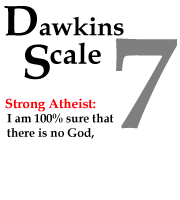
Atheism is NOT a belief claiming God does not exist. Atheistic, like the word amoral, simply means the lack of. Therefore being an atheist is having a lack of belief unless you personally take the stance that there is no god and therefore the burden of proof goes to you. Defending this stance would be near impossible since you would now hold the same burden of proof theists hold by claiming there is a God. When answering the question of yes or no to weather one believes in a god the answer must always be a shade of gray since there is no black and white. The key distinction is that one may claim weather or not they believe in a god, but may never claim absolutely that there is or is not a god.

I take a strong agnostic dualist stance. Strong agnosticism states that we can not know whether there is a God. This stance is atheistic in a sense that there is a lack of belief in a deity. This is the point where definitions and symbols start to fall apart, since I believe god is all. With this pantheistic view I challenge the traditional definition of God as a deity. Pantheism states that the word God is used to symbolize everything within and outside the universe.

Spirituality is the illogical. It is separate from the physical objective reality we live in. We can not know a spiritual reality since our brains are physical substance.

Perhaps the word God needs to represent something more than just a supernatural being. If an alternate reality outside our logic exists, there is really no point in trying to logically define God.